
Quick answer
The best yoga poses for tight hips are Butterfly, Low Lunge, Lizard, Half Pigeon, Reclined Figure Four, Happy Baby, Garland, Wide-Knee Child’s Pose, Seated Wide-Leg Fold and Reclined Bound Angle. Hold each for 5 to 10 slow breaths, or up to 1 to 2 minutes for a deeper release. A 10-minute hip routine 3 to 5 times a week is enough for most beginners to feel a difference within a few weeks.
Contains affiliate links. As an Amazon Associate we earn from qualifying purchases. Disclosure
| Best for | People who sit a lot, runners, cyclists, hikers and anyone with stiff hips or a tight lower back |
|---|---|
| Time needed | 5 to 20 minutes |
| How often | 3 to 5 times a week, or daily for short sessions |
| Equipment | A yoga mat; a block or firm pillow helps |
| Main targets | Hip flexors, inner thighs, outer hips, glutes and the lower back |
| Level | Beginner friendly, with easier options for every pose |
Tight hips are one of the most common complaints in any yoga class. Long hours of sitting keep the front of the hips short, while the muscles around the back and sides get stiff from little use. Over time that tightness can pull on the lower back, change the way you walk and make simple things like sitting cross-legged feel impossible.
The good news is that hips respond well to gentle, regular stretching. These 10 beginner hip openers stretch the hips in every direction, front, back, inner and outer, so you get a balanced release instead of working only one spot.
Why Do Hips Get Tight?
Your hips are ball and socket joints surrounded by some of the largest muscles in the body. When you sit, the hip flexors at the front stay in a shortened position, and the glutes and outer hip muscles switch off. Do that for hours a day and the body adapts to the shape it holds most.
Sports that repeat one movement pattern, such as running and cycling, can add to it by strengthening the hips in one direction only. Stress plays a part too: many people hold tension in the hips and lower back without noticing. If you sit for work, pair this guide with our desk yoga stretches, and if you run, see yoga for runners.
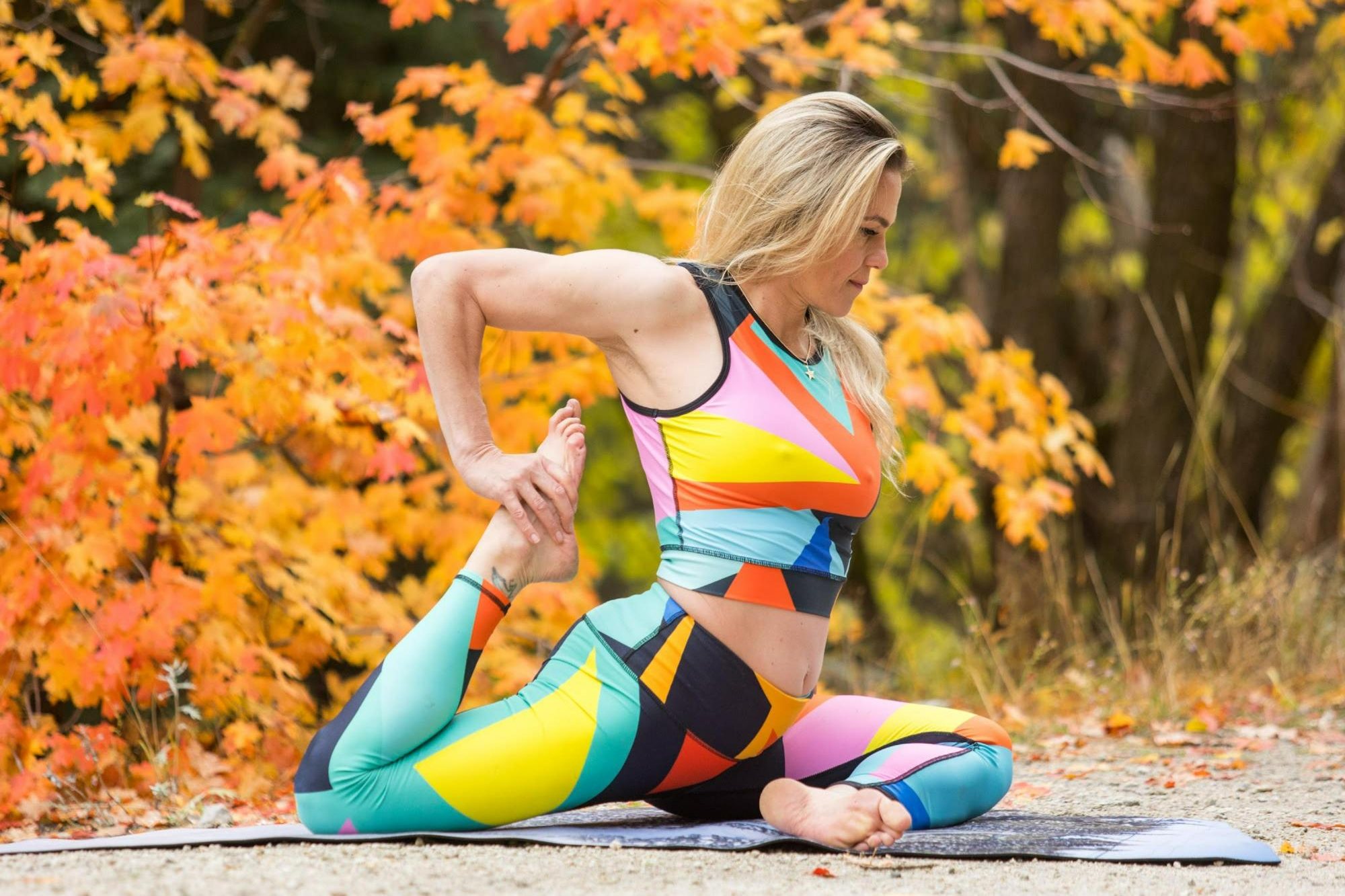
What Are the Best Yoga Poses for Tight Hips?
Warm up first with a few rounds of Cat-Cow or a short walk. Move slowly, breathe through your nose and stop at a comfortable stretch. You should feel the muscle, never the joint.
1. Butterfly Pose (Baddha Konasana)
- Sit tall and bring the soles of your feet together, letting your knees fall open.
- Hold your ankles or feet and draw your heels toward you only as far as is comfortable.
- Lengthen your spine and, if you like, hinge forward from the hips. Hold 5 to 10 breaths.
Make it easier: Sit on a folded blanket or rest a block under each knee.

2. Low Lunge (Anjaneyasana)
- Step your right foot forward between your hands and lower your left knee to the mat. Pad the knee if needed.
- Lift your chest and rest your hands on your front thigh or reach your arms overhead.
- Sink your hips forward until you feel a stretch at the front of the left hip. Hold 5 to 8 breaths, then switch sides.
This is the single best stretch for hip flexors that get tight from sitting.
3. Lizard Pose (Utthan Pristhasana)
From Low Lunge, bring both hands to the inside of your front foot and walk the front foot a little wider. Keep the back knee down and lower onto your forearms only if your hips allow it, or rest your forearms on a block. Hold 5 to 8 breaths per side. Lizard opens the hip flexors and inner groin at the same time.
4. Half Pigeon Pose (Eka Pada Rajakapotasana)
From all fours, bring your right knee toward your right wrist and angle your right shin across the mat. Slide your left leg straight back and square your hips. Stay upright on your hands or fold forward over the front leg. Hold 5 to 10 breaths per side. Place a block or pillow under the right hip if it floats off the floor. See our full Pigeon Pose guide for alignment and variations.
5. Reclined Figure Four (Supta Kapotasana)
Lie on your back with both knees bent. Cross your right ankle over your left thigh and flex your right foot. Thread your hands behind your left thigh and draw it toward your chest. Hold 8 to 10 breaths and switch. This is the gentlest way to stretch the outer hip and glutes, and a great swap for Pigeon if your knees complain.

6. Happy Baby Pose (Ananda Balasana)
Lie on your back, bend your knees toward your armpits and hold the outsides of your feet, your ankles or the backs of your thighs. Keep your lower back and head on the mat and rock gently side to side. Hold 5 to 10 breaths. Learn more in our Happy Baby Pose guide.
7. Garland Pose (Malasana)
Stand with your feet a little wider than your hips, toes turned out. Bend your knees and lower into a deep squat, bringing your palms together at your chest and pressing your elbows into your inner knees. Hold 5 breaths. Sit on a block if your heels lift or your knees feel strained.
8. Wide-Knee Child’s Pose (Balasana)
Kneel with your big toes touching and your knees wide. Fold forward and walk your hands out in front of you, resting your forehead on the mat or a block. Breathe into your hips and lower back for 1 minute. It is the classic Child’s Pose with extra room for the hips.
9. Seated Wide-Leg Forward Fold (Upavistha Konasana)
Sit with your legs wide in a V shape, kneecaps and toes pointing up. Sit on a folded blanket if your back rounds. Walk your hands forward and hinge from the hips, stopping when you feel the inner thighs. Hold 5 to 10 breaths. Bend your knees slightly if your hamstrings are tight.
10. Reclined Bound Angle (Supta Baddha Konasana)
Lie back with the soles of your feet together and your knees falling open. Rest a pillow or block under each thigh so nothing strains. Place one hand on your belly, one on your chest, and breathe slowly for 1 to 3 minutes. It is a restful way to finish any hip practice and pairs well with restorative yoga.
Teacher tip: Tight hips release with time, not force. Stay in each pose long enough to take 5 to 10 slow breaths, and on every exhale let the muscles soften a little. Pushing harder usually makes the muscle tense up again.
What Is a Good Hip Opening Routine?
Pick the routine that matches the time you have. Do both sides of every one-sided pose.
| Routine | Poses | When to use it |
|---|---|---|
| 5-minute reset | Low Lunge, Reclined Figure Four, Happy Baby | After a long day of sitting |
| 10-minute hip opener | Butterfly, Low Lunge, Lizard, Half Pigeon, Wide-Knee Child’s Pose | 3 to 5 times a week |
| 20-minute deep release | All 10 poses in order, holding each for 1 minute | Weekends or after a run, hike or ride |
Want a ready-made week to follow? Our free 7 Day Beginner Yoga Plan builds these stretches into a simple daily habit.
How Do You Stretch Tight Hips Safely?
- Warm up first. Muscles stretch more easily after a few minutes of movement.
- Use props. Blocks, pillows and folded blankets let you stay in a pose long enough to relax.
- Protect your knees. If you feel pain in the knee during Pigeon or Garland, switch to Reclined Figure Four or sit on a block.
- Breathe slowly. Long exhales help the body let go of tension.
- Stay consistent. Ten minutes a few times a week beats one long session a month.
- Strengthen too. Poses like Bridge Pose and Chair Pose build the glutes that support healthy hips.
Who Should Be Careful With Hip Openers?
Be careful: Skip deep hip openers and check with a healthcare provider if you have had a hip replacement, hip or knee surgery, a labral tear or hip impingement. Stop any pose that causes sharp, pinching or joint pain, numbness or tingling. During pregnancy, avoid overstretching and see our prenatal yoga guide.
If tight hips come with lower back pain or pain running down one leg, our guides to yoga for lower back pain and yoga for sciatica offer gentler options.
Props for hip openers
- Cork yoga blocks: bring the floor closer in standing and seated poses
- Yoga bolster: supports long, restful holds
- Yoga strap: extends your reach in hamstring and shoulder stretches
- Massage ball: releases tight glutes, hips and shoulders
Affiliate links. We may earn a commission.
Key Takeaways
- Tight hips usually come from long hours of sitting, repetitive sports and stress.
- Stretch the hips in every direction: front, back, inner and outer.
- Hold each pose for 5 to 10 slow breaths and never force a stretch.
- A 10-minute routine 3 to 5 times a week is enough for most beginners.
- Use props, protect your knees and see a professional if you have a hip injury.
Frequently Asked Questions
What is the best yoga pose for tight hips?
For hips that are tight from sitting, Low Lunge is the most effective single pose because it stretches the hip flexors at the front of the hip. For the outer hips and glutes, Half Pigeon or the gentler Reclined Figure Four work best.
How long does it take to loosen tight hips?
Many people notice their hips feel freer after a single session. Lasting change in flexibility usually takes 3 to 6 weeks of stretching at least 3 times a week.
How long should I hold a hip stretch?
Hold each stretch for 5 to 10 slow breaths, about 30 to 60 seconds. In gentle, supported poses such as Reclined Bound Angle you can stay for 1 to 3 minutes.
Can tight hips cause lower back pain?
Tight hip flexors and glutes can change how the pelvis sits and put extra load on the lower back, which many people feel as stiffness or aching. Stretching the hips often eases that discomfort. See a healthcare provider if pain is severe or lasts more than a few weeks.
Is it OK to do hip openers every day?
Yes, gentle hip openers are safe to do daily for most people. Keep daily sessions short and easy, and save deeper holds for a few times a week.
Why do I feel emotional during hip openers?
Some people feel a release of emotion in long hip stretches. Slow breathing and holding still for a while can calm the nervous system and bring feelings to the surface. It is normal, and you can always come out of the pose and rest.
This article is for educational purposes and is not medical advice. Check with a qualified healthcare provider before starting a new exercise program, especially if you are pregnant, injured or managing a health condition.


